Custom napkins look like the easiest thing on an event order form, which is exactly why they go wrong so often. The artwork gets approved in a hurry, a size and a print method get picked from a dropdown, and the box arrives holding a thousand napkins that are too thin, too small, or printed in a way that buried the logo. None of these mistakes are exotic. They are the same handful every time, and each one is avoidable if you know to look for it before you approve the order.
Ordering a size that fights the moment
The most common mistake is matching the napkin to a mental image instead of to how it will actually be used. Napkins come in a few standard sizes, and they are not interchangeable. A beverage or cocktail napkin is about 10 by 10 inches open and folds to a 5 by 5 inch square, sized for holding under a drink or a passed appetizer. A luncheon napkin is roughly 13 by 13 inches open, folding to 6.5 by 6.5. A dinner napkin is the big one, commonly around 20 by 20 inches open and folding to a 10 by 10 panel that covers a lap through a plated meal. Guest towels are a rectangular amenity size near 12 by 18 inches for restrooms and buffets.
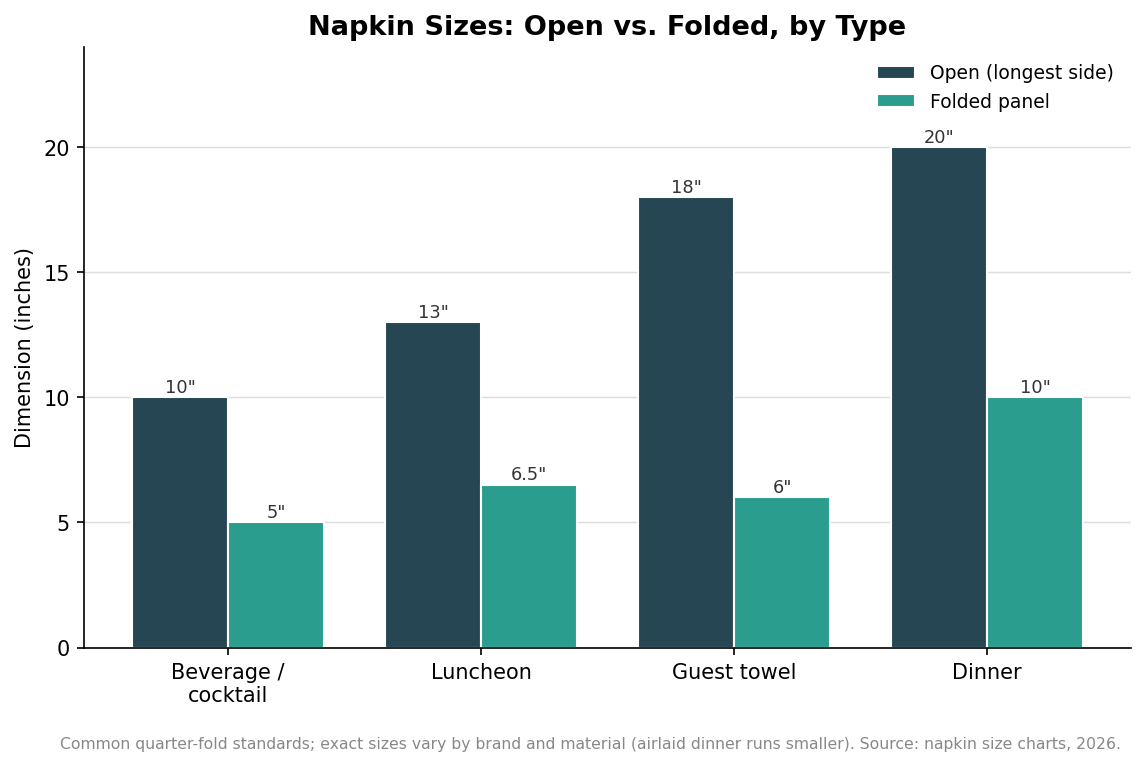
Order cocktail napkins for a seated dinner and guests are dabbing at a full meal with a square barely bigger than a coaster. Order dinner napkins for a stand-up reception with passed bites and you have paid for oversized cloth that guests fold down anyway. Pick the size from the service style first, and remember that exact dimensions vary by brand and material, so confirm the numbers on the actual product rather than assuming.
Treating ply and material as the same decision
The second mistake is ignoring what the napkin is made of. Standard paper napkins come in one, two, and three plies of tissue, and they are built for higher-volume everyday service where thin and inexpensive is the point. Airlaid is a different material entirely: a non-woven paper bonded with air rather than water, thicker, softer, and visually close to cloth, which is why it reads as premium and is a favorite for weddings and upscale events. Specify a thin one-ply tissue for a plated dinner with rich food and it disintegrates in hand; pay for airlaid on a high-volume bar giveaway and you have spent a linen-like budget on something guests use once and toss. Match the material to both the food and the impression you are trying to make.
Picking a print method the artwork cannot use
Print method is where good logos die. Foil stamping presses a metallic film into the napkin, one color per stamp, and it looks genuinely luxe, especially on a dark or saturated napkin, with a wide range of Pantone-matched foil colors to choose from. Flat ink printing lays down solid spot colors and is clean and economical for a simple one or two-color mark. Full-color digital printing is the only option that reproduces photographs, gradients, and many-colored artwork, and it looks best on white or light airlaid stock. The mistake is sending the wrong artwork to the wrong method: a full-color photographic logo cannot be rendered as a single-color foil, and a pale metallic foil on a light napkin simply disappears. Decide the print method against the actual artwork, not against which one sounds fanciest.
Designing without the fold and the print area in mind
Even the right size and method fail if the art is laid out for a flat sheet. A napkin is seen folded, so only one quarter panel shows in use, and anything outside that panel is invisible until someone unfolds it. A wide wordmark that looks balanced on the open sheet can run off the visible panel or straddle a fold line once folded. The printable canvas also shrinks dramatically as the napkin gets smaller, which is easy to underestimate.
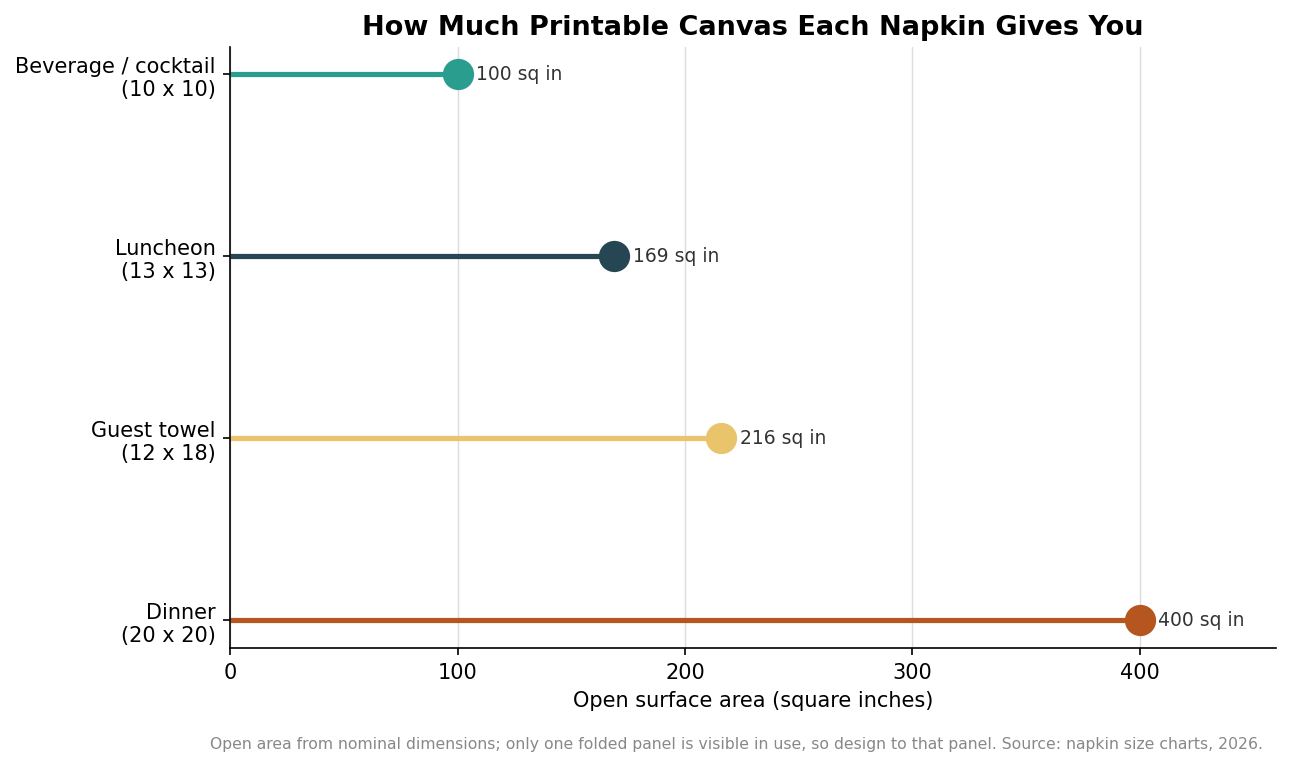
Design to the folded panel, keep the logo centered within a safe margin, and avoid critical detail near the edges and fold lines. On a cocktail napkin especially, a busy logo that works on a business card will be cramped; simplify the mark and give it room. Ask for the printer’s template so the artwork is built to the exact visible area rather than trimmed down later.
Underestimating quantity and lead time
The last two mistakes are logistical and they compound. People count one napkin per guest and run out by mid-event, because a guest at a bar goes through two or three over a night. Order a comfortable buffer above head count rather than exactly to it. Timing trips up the rest: standard turnaround at Get Custom Napkins is about 2 weeks after you approve the free mockup, and foil setup plus a proofing round can add to that. Express turnaround is available on request but is not the standard timeline. The minimum order is 12 pieces on any napkin style, but foil carries per-color setup and premium materials raise the floor. Approve the proof early, confirm the quantity with a margin, and let the lead time drive the order date so you are not paying rush fees to fix a calendar you could have planned around.
None of these are hard to avoid once they are named. Choose the size from the service style, the material from the food and the feel, the print method from the artwork, the layout from the fold, and the quantity and order date from the real timeline. Get those five right and custom napkins go back to being the easy part of the order.