What a napkin is made of decides how it feels, how much liquid it holds, and what it costs — far more than the logo printed on it. Two families cover almost every custom order: conventional tissue, the familiar soft paper napkin, and airlaid, a heavier nonwoven engineered to feel like cloth. Knowing how each one is built, and where cloth still wins, is what keeps you from overpaying for a bar napkin or under-buying for a plated dinner.
Tissue napkins: how ply and weight really work
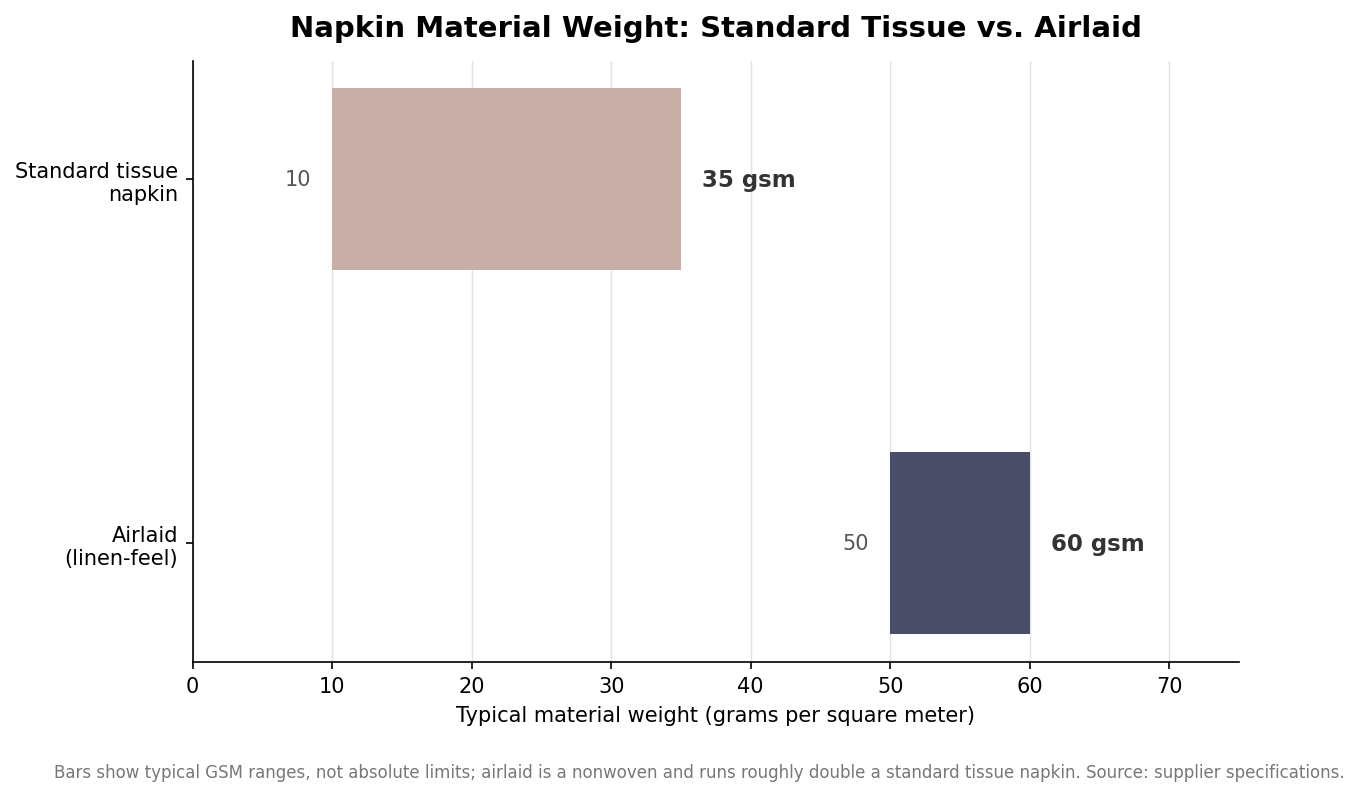
A tissue napkin is made by forming and creping thin sheets of paper, then bonding them in layers called plies. A single-ply beverage napkin is light and inexpensive; two- and three-ply napkins stack more sheets for extra thickness, softness, and absorbency. Standard tissue napkins land in a fairly narrow band of material weight, roughly 10 to 35 grams per square meter across the common grades, and within that range there is a real trade-off: softness and strength pull against each other, so the softest, most luxurious-feeling tissue is also the quickest to shred when it gets wet or is tugged across a plate.
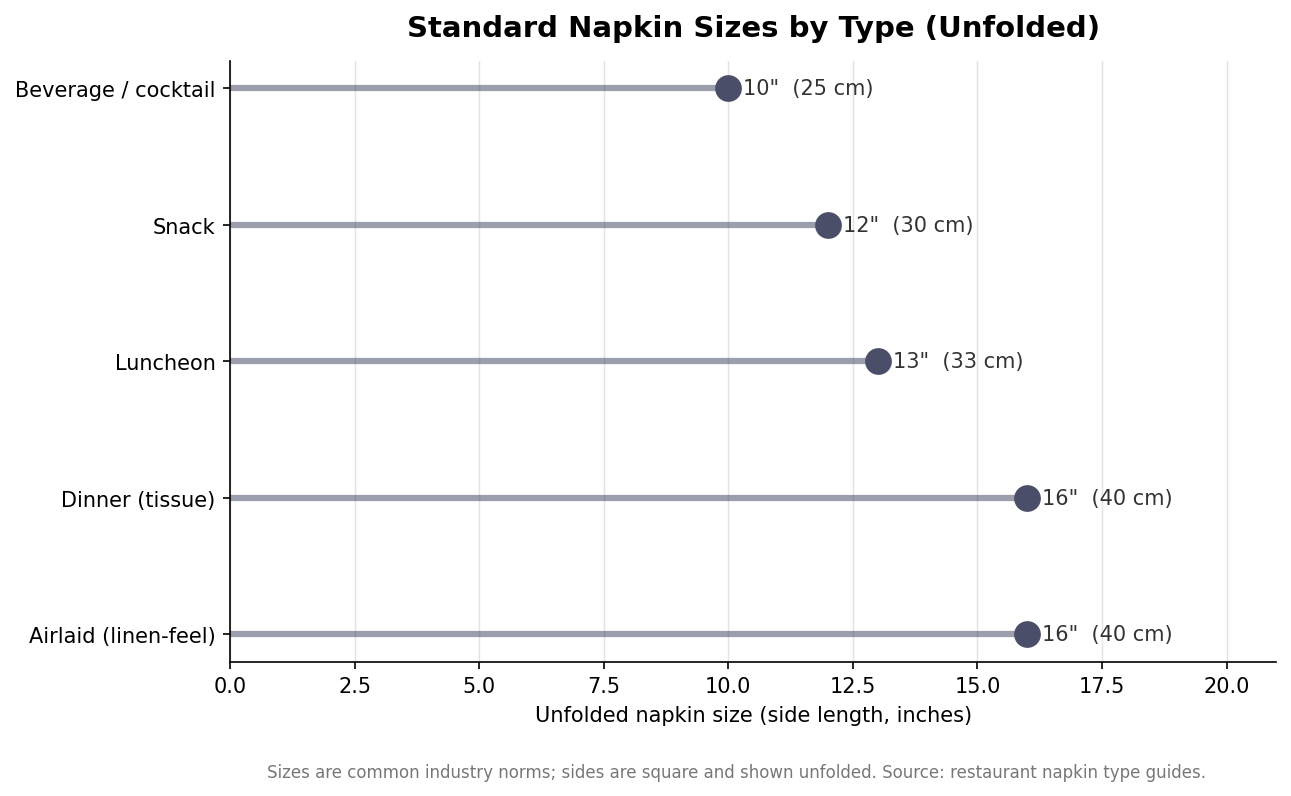
Size tracks use rather than material. Beverage or cocktail napkins are about 10 inches square, snack napkins around 12, luncheon napkins about 13, and dinner napkins 16 inches square, folding down to fit the place setting. Choosing ply is really about how much work the napkin has to do: light finger food forgives a single ply, while a messy plated meal wants the extra absorbency of two or three.
Fold and packaging matter as much as raw size once the napkin reaches the table. The same dinner napkin can arrive as a simple quarter-fold, an eighth or book fold that presents a clean panel for a printed logo, or an interfold made to feed one at a time from a dispenser. A dispenser-grade napkin has to match the dispenser’s throat to feed without jamming, so if you are buying for a countertop or wall unit, confirm the fold and opening before you lock in the stock, because a handsome napkin that will not dispense becomes a daily headache.
Airlaid: the linen-feel disposable
Airlaid is a different material, not just a heavier tissue. It is a lofty nonwoven made mostly from fluff pulp, formed by dispersing the fibers in air rather than water, which produces a thicker, softer, more absorbent sheet with a distinctly cloth-like hand. In practical terms a single-ply airlaid napkin behaves like a piece of light fabric: it stays strong when wet, resists linting, and drapes rather than crumples. That construction is why upscale restaurants and wedding planners reach for it when a paper napkin would undercut the table.
The weight difference is the clearest way to see the gap. Where standard tissue sits between roughly 10 and 35 grams per square meter, a typical airlaid dinner napkin runs closer to 50 to 60, roughly double the substance in a single layer. That heft is what carries embossing and foil crisply and what lets a guest actually use the napkin without it disintegrating. Airlaid also takes deep, saturated dye and holds an emboss without flattening, so a solid-color airlaid in a brand shade reads richer than the same color printed onto thin tissue. It costs more per piece, which is why airlaid earns its place at events where the napkin is part of the presentation rather than a utility.
Virgin, recycled, or blended pulp
Underneath ply and construction sits the fiber source, and it shapes both cost and appearance. Virgin pulp, made from fresh wood fiber, gives the brightest white and the most consistent surface for printing, at the highest resource cost. Recycled pulp lowers that footprint but tends toward a slightly warmer, less uniform base and can accept ink a touch differently. Many stocks split the difference as a semi-virgin blend, balancing brightness, strength, and price. Brighter virgin stock makes fine type and full-color art pop, while a busy or dark design can mask the warmer cast of recycled fiber, so the fiber and the artwork are worth deciding together. Because napkins touch food and mouths, any stock you order should be a food-contact-appropriate grade; and if a compostable or recycled claim matters to your brand, ask the supplier to name the specific certification rather than relying on a generic label, since terms like biodegradable and compostable are not interchangeable.
How material and print method interact
The stock you pick also limits how a logo can be applied. Flat printing sits comfortably on almost any tissue or airlaid surface, but the more tactile methods have preferences. Embossing needs enough thickness to hold a raised impression, which is why it reads far better on airlaid or a heavier multi-ply tissue than on a thin single-ply. Foil stamping, likewise, lays down more cleanly on a dense, smooth surface. If a design leans on texture or metallic shine, the material decision effectively gets made first, and the print method follows from it — not the other way around.
Matching the material to the moment
Put together, the choice is usually quick. A high-volume bar or coffee counter, where napkins are grabbed by the handful, is a job for economical single- or two-ply tissue at a beverage or luncheon size. A casual restaurant handing out napkins with plated food wants two- or three-ply dinner tissue for the absorbency. A wedding, gala, or brand event where the napkin sits folded on the plate is where airlaid pays for itself, especially paired with embossing or foil. Decide the setting and the level of use first, let that point you to tissue or airlaid, then choose ply, size, and fiber to fit. Ordering in that order keeps both the feel and the budget where you want them.